



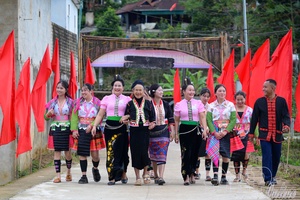
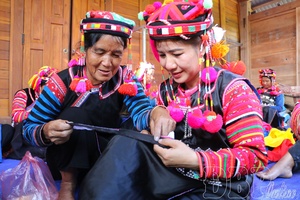
Lồng village, Quài Tở commune, has nearly 120 households with over 550 inhabitants, 100% of whom are of the Mông ethnic group. This place features diverse natural landscapes alongside distinctive traditional cultural traits, reflected in residential architecture, costumes, language, customs, festivals, cuisine, folk songs, and dances. Promoting available advantages, in 2023, people of Lồng village began joining hands to build a community-based tourism model. After more than 3 years of operating and perfecting the model, in March 2026, Lồng village community-based cultural tourism site was officially inaugurated, marking a new direction in preserving and promoting identity linked to economic development.
Chairman of Quài Tở commune People’s Committee Nhữ Duy Đông said: “To support local people in developing community-based tourism, the commune guided villagers to organize activities systematically, suited to actual conditions; combined with focusing on communicating and promoting images, cultural beauty, and local landscapes to attract tourists. To date, Lồng village has 4 households operating homestays, providing accommodation, cuisine, and cultural experience services.”
To maintain tourism activities in good order, Lồng village established a Community Tourism Management Board, formulated operating regulations, and designed a 2-day 1-night experiential tour to explore natural landscapes, learn about daily life, and engage in cultural and artistic exchanges with indigenous residents.
Vàng Chờ Tính, owner of Chờ Tính homestay, shared: “Since doing community-based tourism, we are very excited to see tourists interested in and fond of our ethnic group’s traditional cultural traits. Panpipe dances, traditional dishes, and customs attached to Mông people’s lives have now become experiences welcomed by visitors. That gives us more motivation to preserve and pass down our ancestors’ cultural values to future generations.”
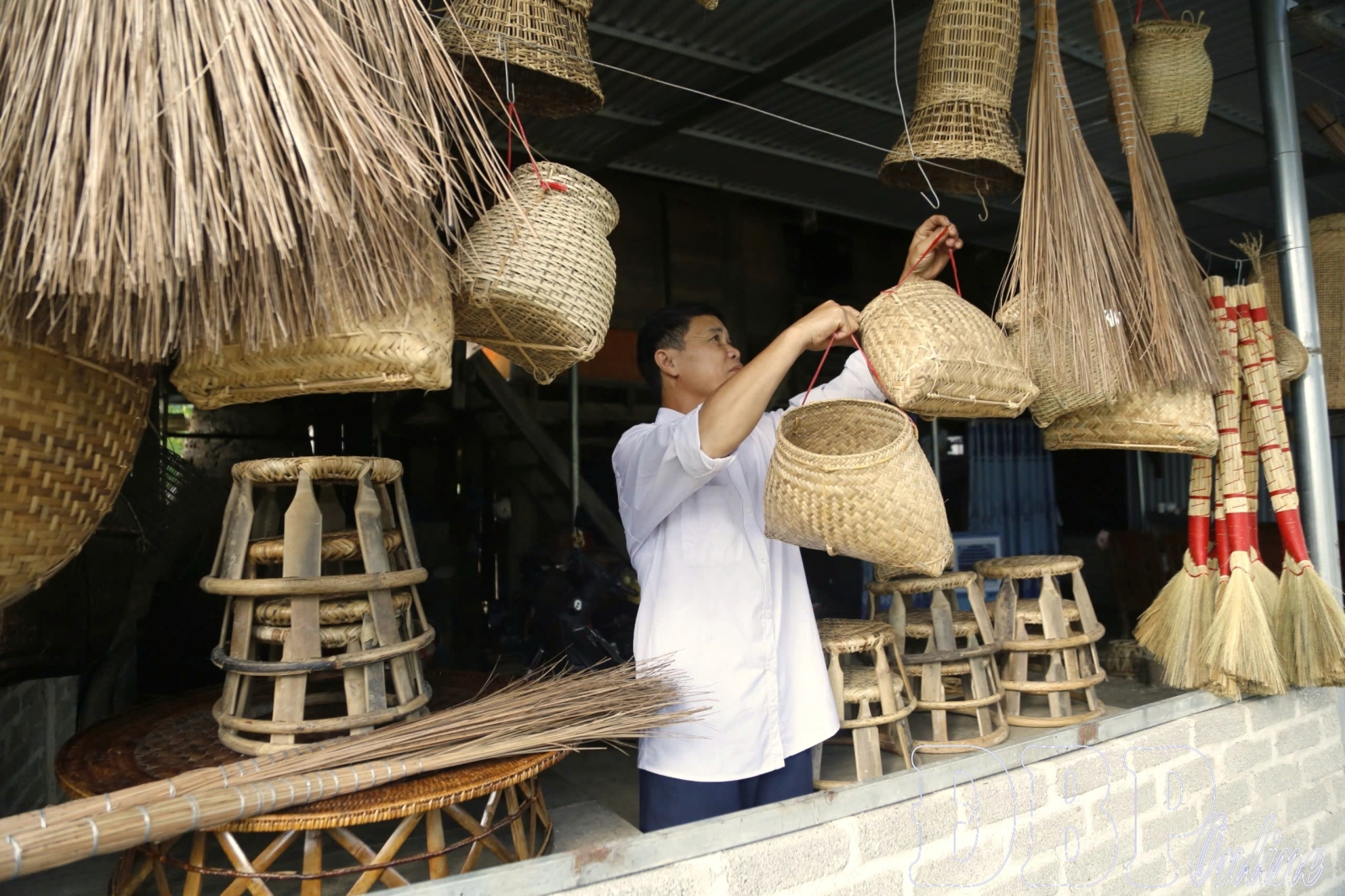
From familiar materials of the mountains and forests (bamboo, neohouzeaua, rattan...), through skillful hands, local people create useful items such as paddy baskets, winnowing baskets, sieves, trays, and hampers. Each product satisfies daily needs while preserving experience, technique, and dexterity handed down across generations. Acknowledging the cultural, historical, and technical values of the traditional craft, on June 3, 2025, the Ministry of Culture, Sports and Tourism issued Decision No.1659/QĐ-BVHTTDL, inscribing the rattan and bamboo weaving technique of the Thái people in Điện Biên province into the National Intangible Cultural Heritage List.
Quàng Văn Phích, from Trung Tâm village, who has been attached to the rattan and bamboo weaving craft for many years in Nà Tấu commune, recalled: “In the past, weaving was the trade that fed many families in the village. Young men went to the forest to gather rattan, while the elderly and women stayed home to weave. Nearly the whole village practiced the craft, helping many families gain food, clothing, and an easier life.”
In Na Sang commune, the rattan and bamboo weaving craft is also maintained and developed by local residents, concentrated in Hin, Na Pheo, Co Đứa, and Na Sang villages. Lò Thị Đon, from Co Đứa village, shared: “Items woven from rattan and bamboo are durable, beautiful, and environmentally friendly, so they are favored by many people. Nowadays, traders come directly to homes to purchase them, buying as much as we can make. In some months, I sell dozens of flat baskets, hampers, and trays. Many households in the village also practice the craft, taking advantage of agricultural idle time to both have jobs and earn extra income.”
Thanks to increasingly favorable consumption channels, many families in Na Sang have more motivation to maintain traditional crafts. Depending on the quantity and product type, each household can earn from several hundred thousand to several million VND per month. Product selling prices are quite diverse, ranging from VND 10,000 to VND 400,000 depending on the type. In particular, products requiring high technical skills and effort, such as rattan dining trays, cost from VND 1.2 to VND 1.5 million.
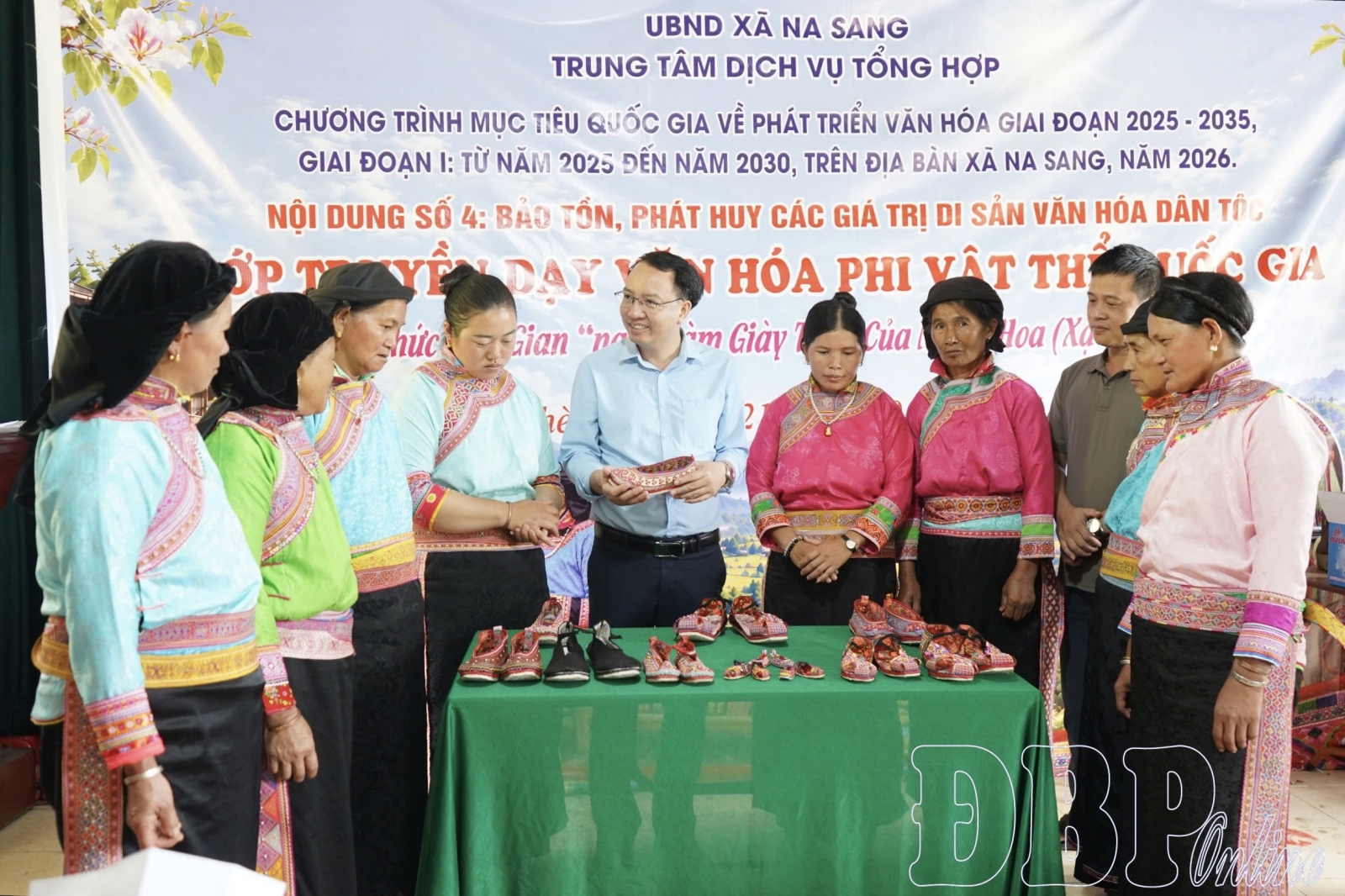
Lò Thị Đon, from Co Đứa village, shared: “Now that the rattan and bamboo weaving technique of Thái people in Điện Biên province has been recognized as a national intangible cultural heritage, we have even more motivation to keep the craft. The biggest wish of local people is to have stable output and more young people learning the craft so that rattan and bamboo weaving will not fade away, continuing to be present in today’s life.”
Accompanying local people in preserving and promoting cultural identity, in recent years, Điện Biên province has paid attention to preserving traditional festivals linked to tourism development. Many festivals have been restored and maintained, such as: Gầu Tào Festival of the Mông ethnic group in Nà Bủng commune; Seed Sowing Festival of the Khơ Mú ethnic group in Búng Lao commune; Bản Phủ Citadel Festival in Thanh An commune; and Xên bản, Xên mường ceremonies of Thái people in the Điện Biên basin communes.
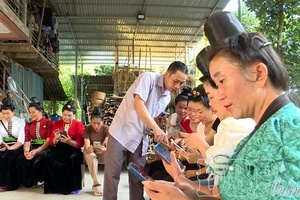
Along with restoring traditional rituals, outdated customs and practices that are no longer suitable have been gradually reviewed and adjusted toward civilization and thrift. In many localities, performances of ethnic costumes, folk songs, folk dances, and traditional musical instruments, alongside traditional cuisine introductions, are integrated into cultural, sports, and tourism festivals, and the Great National Solidarity Festival in residential areas. Thereby, community cultural spaces are revived, creating conditions for local people to directly practice, preserve, transmit, and enjoy their ethnic group’s cultural values.
PV








You have 500/500 characters left
Please enter 5 or more characters!!!